

Context Layers
Learn more about Lytics' Context Layers
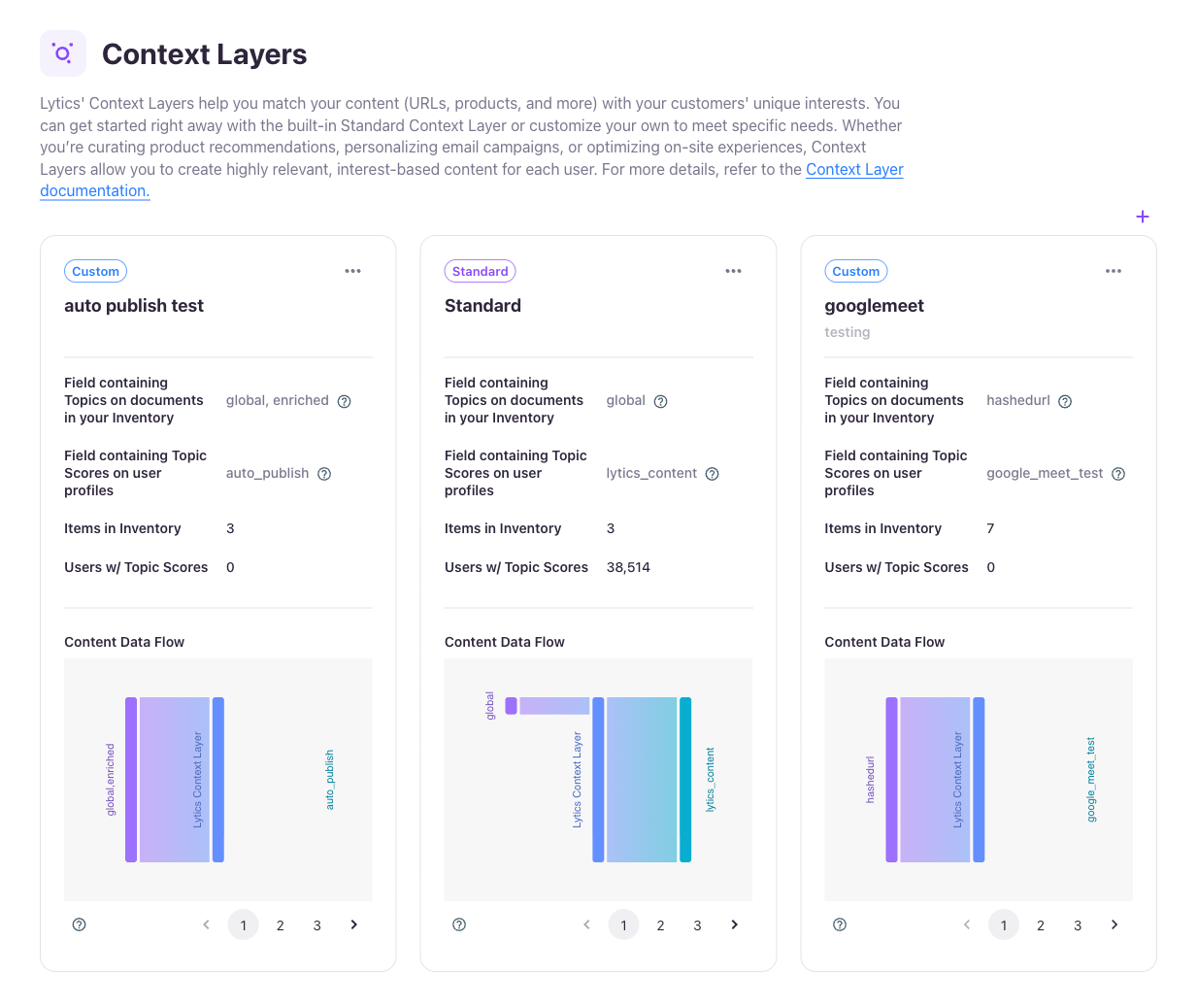
Lytics' Context Layers allow you to analyze, interpret, and incorporate user interests into your marketing activities. While the Lytics Context Layer is primarily used with webpages, Lytics provides 3 kinds of Context Layers for various use cases and tactics.
- The Default Context Layer, which examines web data using NLP (Natural language processing) to generate Topics (think keywords, categories, and subjects). This is the standard Context Layer and requires no out-of-the-box configuration.
- Custom Context Layers allow you to link custom fields associated with your content to your users. When incorporating data from Shopify, or offline systems that contain product data, Custom Context Layers allow you to associate features/attributes from your inventory with your users. For example, consider a database of articles with genre data. With a Custom Context Layer, you can track which genres each of your users has interacted with.
- Collaborative Filters empower you to recommend items based on what other users do. This is analogous to "users also bought", or "users also read" recommendations that are often surfaced on Amazon or other websites. Using a Collaborative Filter algorithm, Lytics analyzes user behavior and exposes Recommendations via the Recommendation API.
How to use Context Layers
Context Layers are a rather foreign concept and you may be confused about how this can help improve your marketing initiatives. Keep in mind that the end goal is to gain a better understanding of your users. With Lytics' Context Layer, there are three commonly used techniques to best utilize this powerful data:
-
Topics & Affinities: With the Default Context Layer and Custom Context Layers, you can use the Lytics UI to view the Topic Taxonomy. This visualization displays how your Topics co-occur and relate to each other. The Topic Taxonomy view can be useful to visualize similar Topics, which can be useful in creating Affinities.

-
User Segmentation: Lytics' Context Layers output a new field on the user profile that captures the interests that a user has exhibited. Using this data, you can create high-powered audiences to target users with specific interests using Lytics Audience Builder.

-
Recommendations: Using Lytics' Recommendation API, you can enable personalized recommendations for your users based on their activities. For instance, you can recommend URLs based on a user's browsing history, or recommend products based on a user's purchase history. To get started with Recommendations, check out the Recommendation documentation, or navigate to the Experiences tab.

How to Create Context Layers
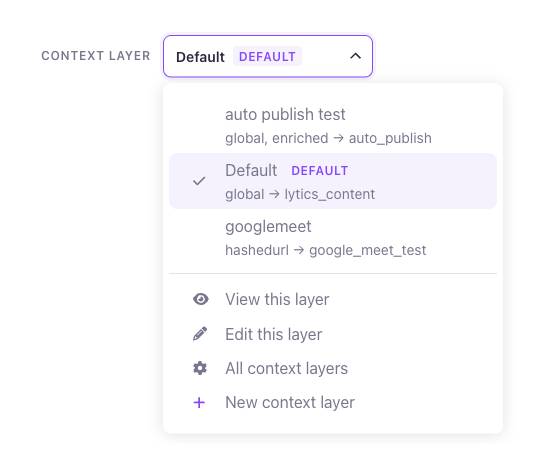
Context Layers are managed from the Topics page under Content. Open the Context layer selector at the top of the page:
- New context layer opens the wizard for a Custom Context Layer.
- All context layers lists every Context Layer. Its + button (Create a New Context Layer) lets you choose between a Context Layer, a Collaborative Filter, and the Shopify Integration.
- View this layer and Edit this layer open the Context Layer selected on the Topics page.
Each create option presents a wizard to configure the Context Layer. Please contact Lytics Support if you experience any issues creating your new Context Layer.

Updated 13 days ago