
Identity Explorer
Overview
The Identity Explorer is a powerful feature within the Lytics platform, crafted to offer you an extensive and thorough examination of an individual user's Customer 360 (C360) profile. This tool not only improves your capacity to comprehend the composition of a user's profile from diverse sources but also grants access to a wealth of attributes and insights associated with the user.
Key Sections
The Identity Explorer is organized into several key sections, each offering a unique perspective into the consumer:
Identity
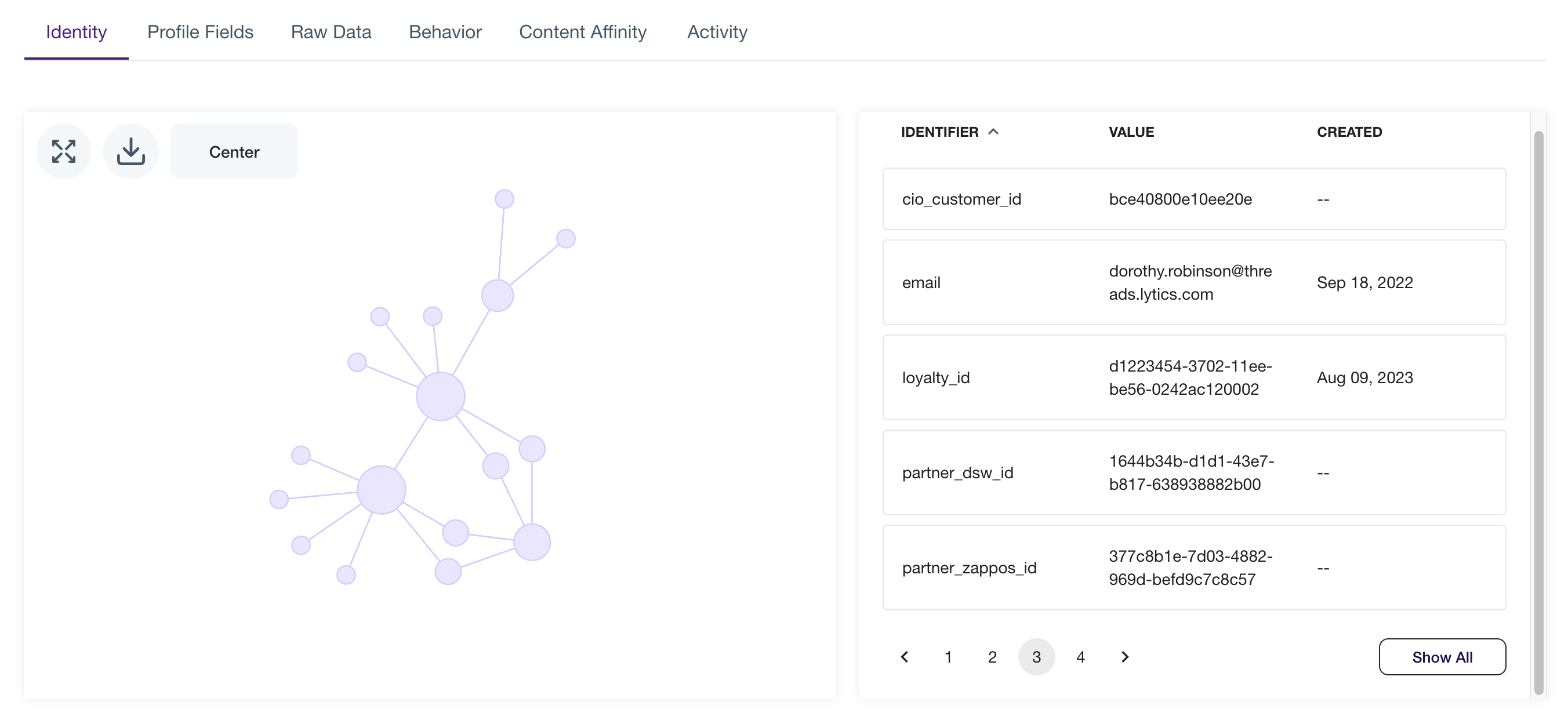
In the "Identity" section, you can explore the relationships between unique identifiers that establish connections across the various channels the consumer engages with. The "Identifier List" provides a detailed overview of the keys and values used for linking, while the "Identity Graph" visually represents these relationships. This section helps you understand how the consumer is identified and linked across platforms.
Profile Fields
The "Profile Fields" section encompasses an exhaustive catalog (feature store) of attributes along with their corresponding values linked to the customer's profile. This encompasses default schema fields from connected tools, custom attributes, and many inferred or machine learning-based attributes generated by Lytics. This section offers an expansive overview of the consumer's data, facilitating precise targeting and personalized interactions.
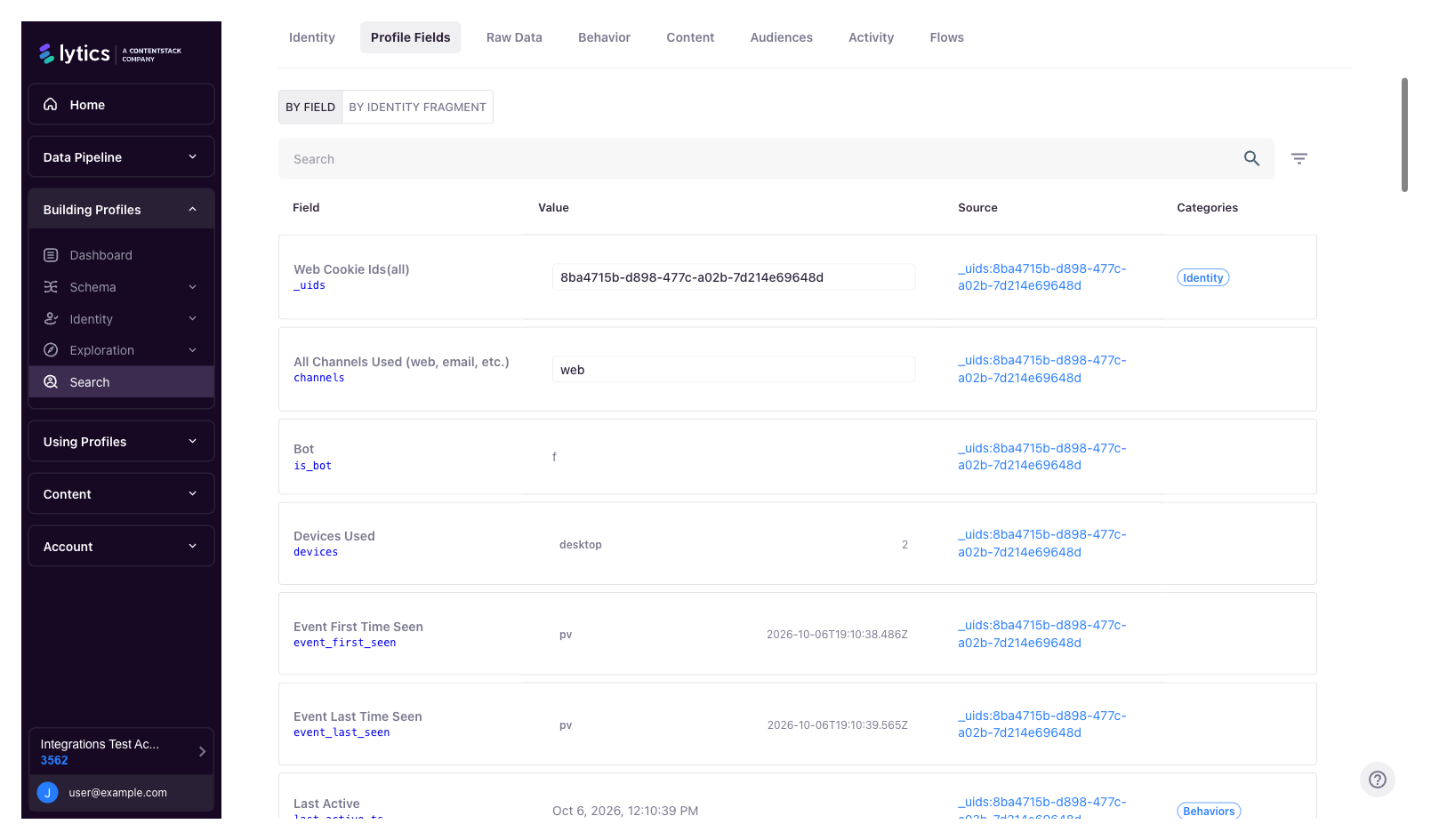
Fields are listed with identifiers first, in identity-key rank order, then the remaining fields alphabetically, with internal fields (those starting with _) last. Each row shows the field's Value, Source, and Categories.
Where a value came from
The Source column names what actually set the value on this profile, such as a single identity fragment, a Cloud Connect data model (shown as Cloud Connect: <data model name>), Scoring, or "Merged from N fragments" when the field's merge operator combined several fragments. Fields load right away; the Source column fills in a moment later.
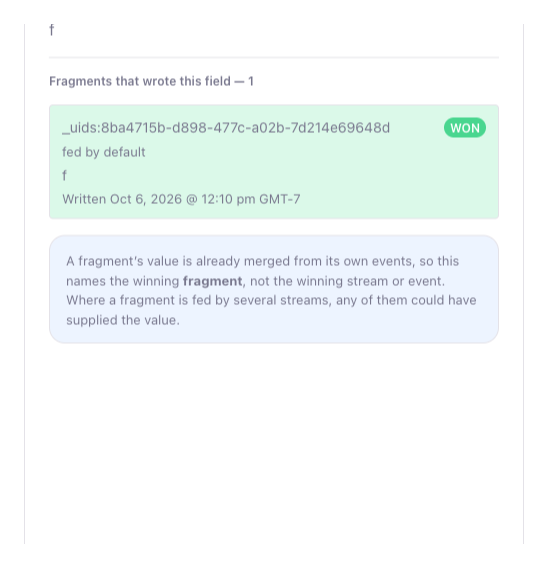
Click a Source cell to open the Why this value? drawer. It shows the field's merge operator, its Current value, and a card for each fragment that wrote the field, with that fragment's value, timestamp, and streams. Each card is marked WON or EXCLUDED, so you can see which contributor supplied the merged value. The drawer names the winning fragment, not the individual stream or event within it.
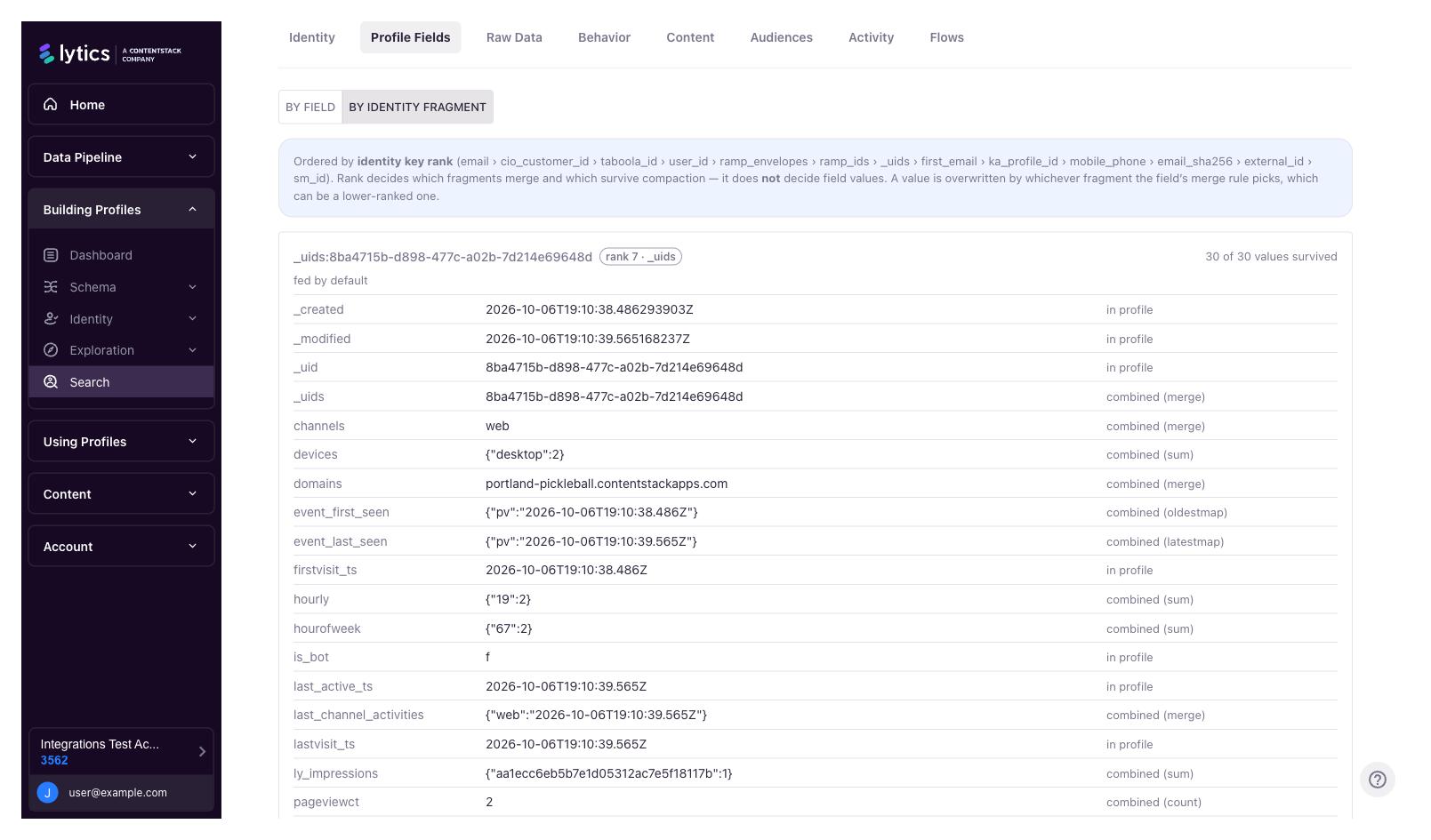
By identity fragment
Use the By field / By identity fragment toggle above the table to switch views. By identity fragment groups the profile's fields by the fragment that holds them and marks, for each fragment, which values survived on the merged profile and which were overwritten, and by what. Fragments are listed in identity-key rank order, but that rank does not decide which value wins. The field's merge operator does.
Searching & Filtering
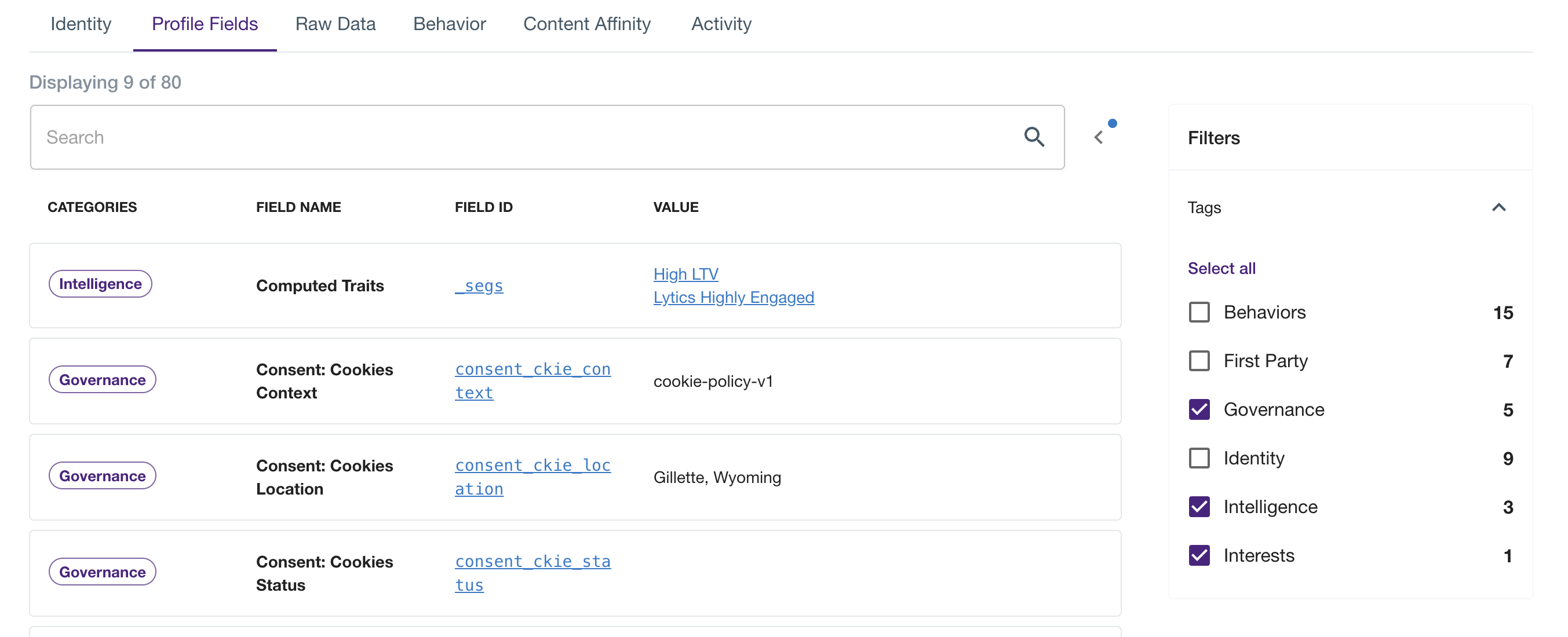
The "Profile Fields" view can be filtered by either typing in a query or selecting any combination of pre-built filters, such as Stream or field category. We find it most effective to filter by the field categories to simplify the view during exploration.
Raw Data
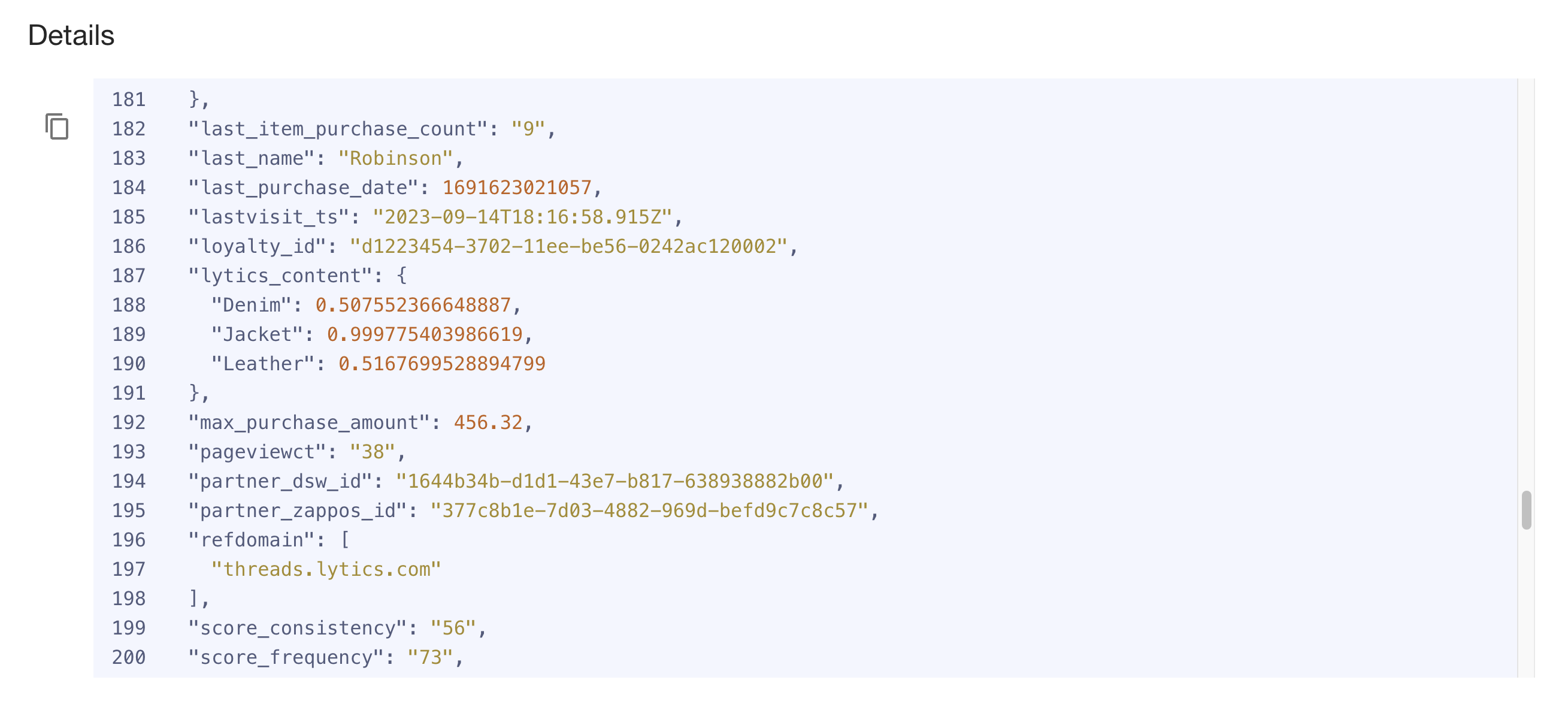
For developers and data enthusiasts, the "Raw Data" section offers a JSON representation of the complete profile.
Behavior
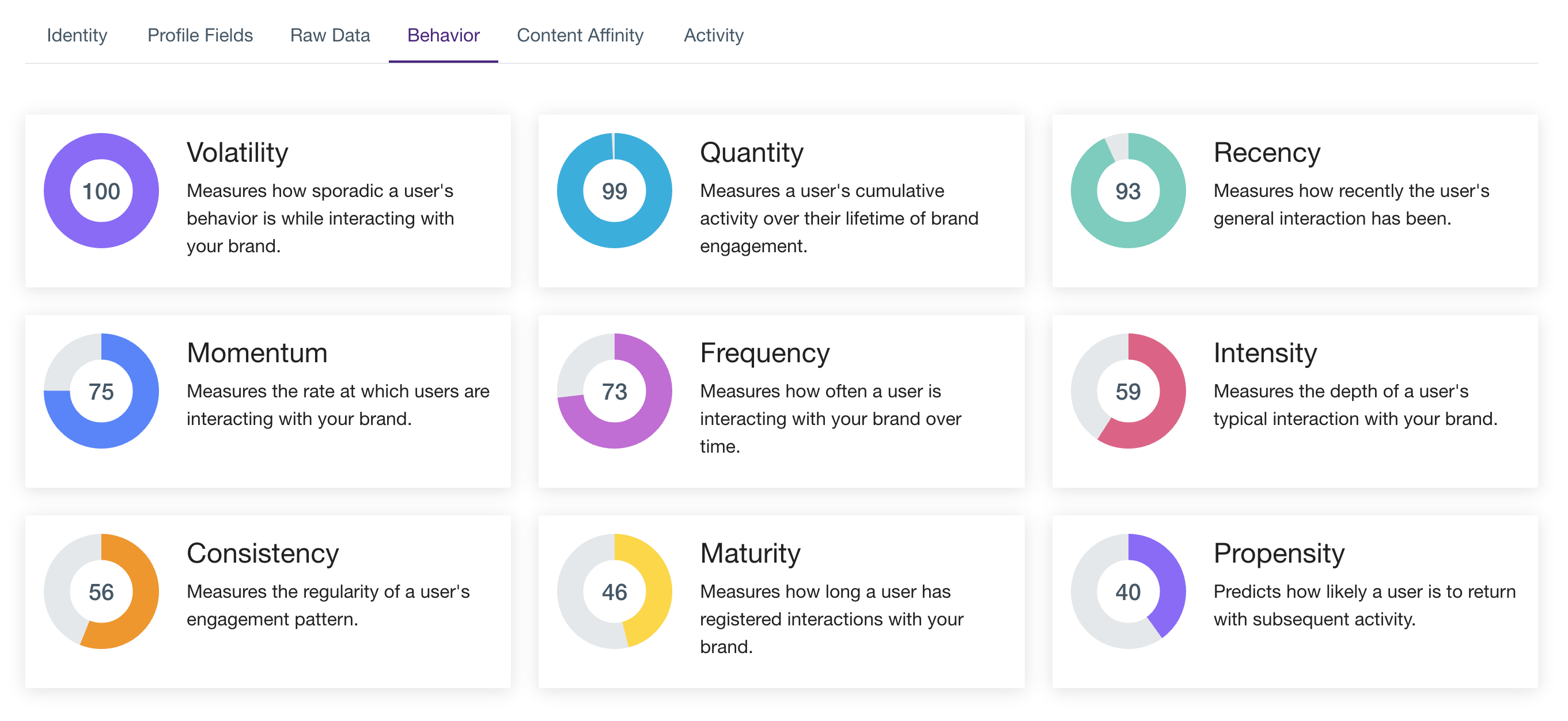
In the "Behavior" section, you'll find a graphical representation of Lytics' nine behavioral scores. These scores offer valuable insights into the user's engagement patterns across channels, helping you tailor marketing strategies and campaigns to their preferences.
Content Affinity
The "Content Affinity" section provides a graphical representation of product and content-based affinity scores for the user. It reveals the user's preferences and interests, enabling you to make data-driven recommendations and content suggestions.

Activity
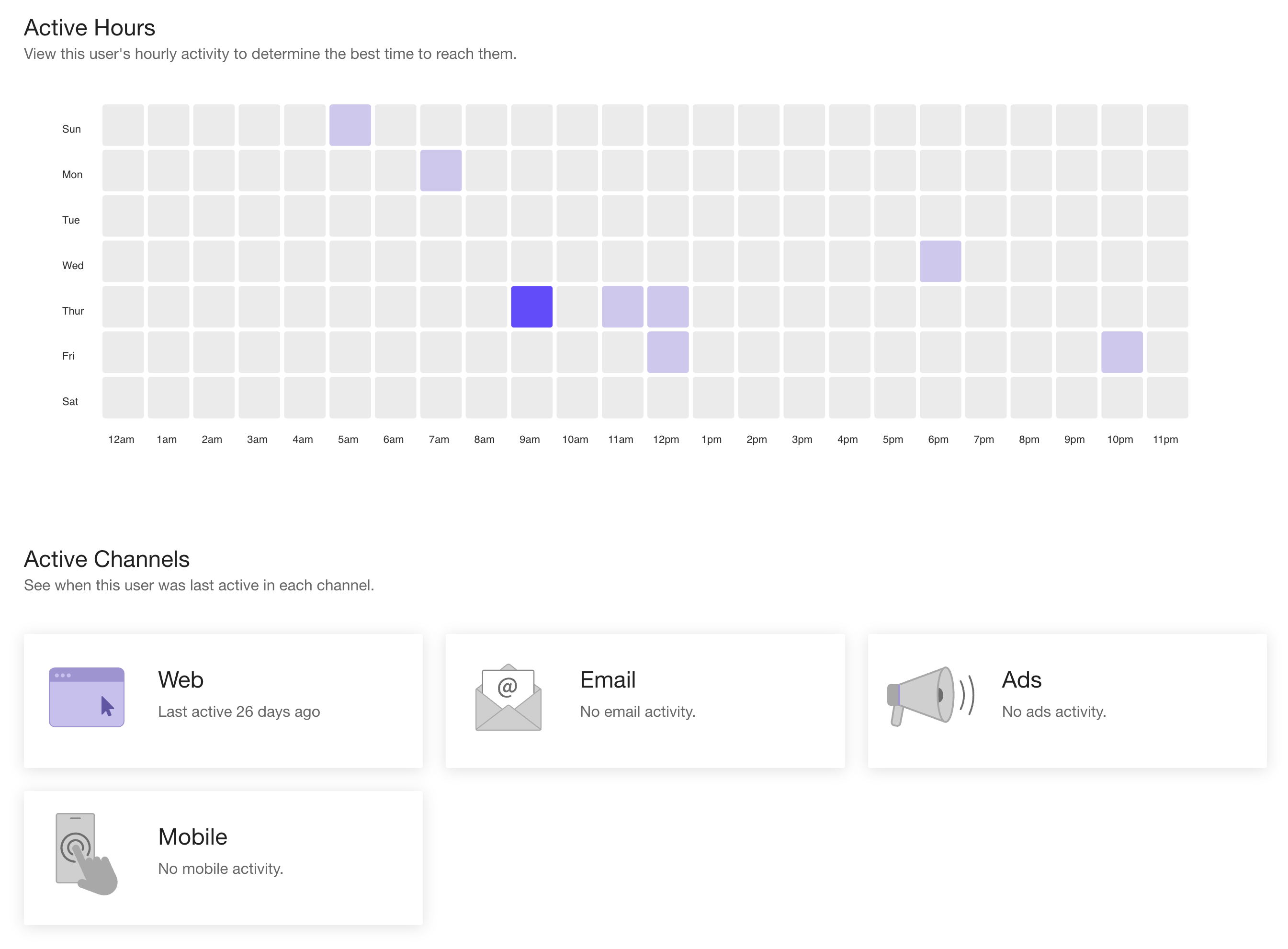
The "Activity" section overviews the user's activity over time. You can track when they are most active and identify the best times to communicate with them. This historical data helps optimize the timing of your interactions for maximum engagement.
Deleting Profiles
In support of GDPR Profile Administrators may also delete a single profile or download the profile data to provide to a consumer directly if requested.
Updated 10 days ago